

DTH satellite broadcasting gives broadcasters, governments, telecoms operators and media networks a reliable way to deliver television channels across wide geographic areas. DTH stands for Direct-to-Home, meaning broadcast content is distributed by satellite directly to receiving dishes at homes, communities, commercial premises or platform receiving sites. For African markets, where audiences may be spread across cities, towns, rural regions and remote locations, satellite delivery remains an important part of professional media infrastructure.
The strength of DTH satellite broadcasting is reach. A planned satellite platform can support wide-area distribution without needing a terrestrial transmitter site in every coverage location. This makes it especially relevant where terrain, distance, infrastructure gaps or national coverage requirements make terrestrial-only delivery difficult. AUCOM supports this environment through Direct-to-Home Satellite DTH solutions that include head-end design, satellite distribution, integration, RF uplink systems, monitoring and technical support.
What DTH Satellite Broadcasting Does
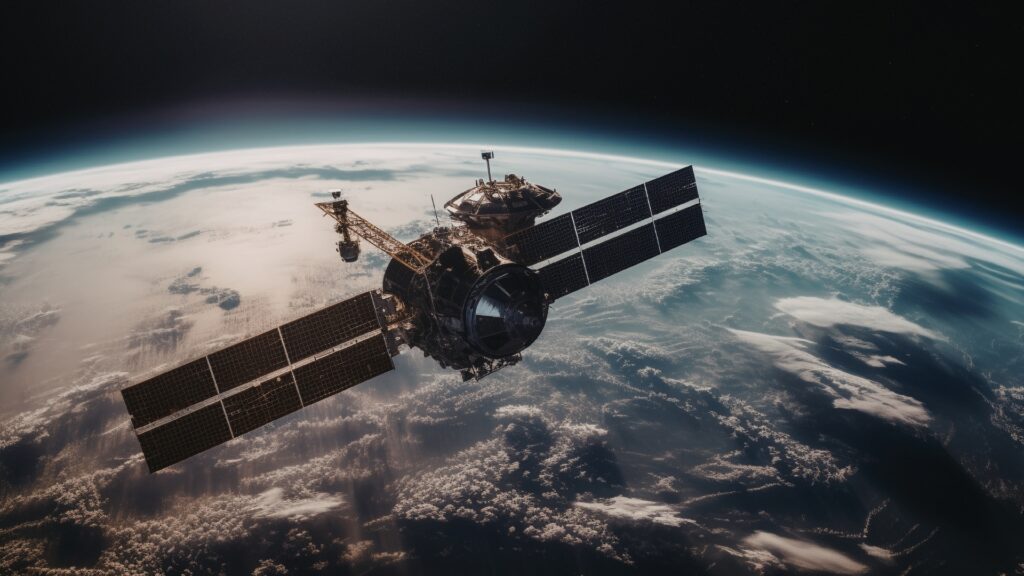
A DTH platform takes prepared broadcast channels from a head-end, processes them for satellite distribution, uplinks them to a satellite and makes them available to receiving dishes within the satellite footprint. Viewers or receiving sites use a dish, low-noise block converter and set-top box or integrated receiver decoder to receive and decode the service.
In a professional media network, DTH can support free-to-air television, pay-TV platforms, national broadcaster distribution, regional content delivery and backup distribution. It can also be used alongside DTT, OTT and IPTV as part of a wider broadcast strategy. For operators that need stable coverage across countries or regions, DTH provides a practical route to wide-area channel availability.

The Head-End Is the Starting Point
The DTH head-end is where incoming channels are prepared for satellite transmission. This may include contribution feed reception, encoding, multiplexing, transport stream configuration, service information, conditional access, monitoring and handoff to the RF uplink chain. If the head-end is poorly designed, the satellite link may still operate, but the service quality, channel structure and operational control can suffer.
Head-end planning must define the number of channels, video formats, compression standards, redundancy requirements, conditional access needs, monitoring points and future expansion capacity. For a multi-channel platform, these details affect both technical performance and commercial operation. A broadcaster cannot treat the head-end as a generic equipment room. It is the control point for the DTH platform.
Why DVB-S2 Matters in Satellite Broadcasting
DVB-S2 is widely used for modern satellite broadcast services. It was developed as a second-generation satellite standard for broadcasting, interactive services, news gathering and broadband satellite applications. The DVB Project notes that DVB-S2 introduced stronger coding and modulation options compared with DVB-S, with capacity gains depending on modulation type and code rate.
For broadcasters and platform operators, this matters because satellite capacity is a major operating cost. Efficient modulation and coding can help make better use of available transponder capacity while maintaining the required service reliability. The correct DVB-S2 configuration depends on the service model, link budget, coverage area, receiving equipment and required signal robustness.
Satellite Reach Must Be Planned, Not Assumed
A satellite footprint may cover a large region, but professional DTH planning still requires careful analysis. The operator must assess satellite capacity, transponder characteristics, uplink location, downlink coverage, dish size assumptions, weather margin, service availability and receiver requirements. A service designed for urban viewers with larger dishes may not perform the same way for rural audiences using smaller consumer equipment.
Rain fade, especially in higher frequency bands, must be considered in link planning. The uplink and downlink design should include enough margin for the operating environment. For African broadcasters, this is important because climate, location, terrain, installation quality and viewer equipment can all affect real reception performance.
Conditional Access Supports Pay-TV and Controlled Distribution
Many DTH platforms require conditional access to control who can view the service. This is essential for pay-TV, licensed regional content, controlled government distribution or private platform models. Conditional access systems manage entitlement, encryption and receiver authorisation, allowing operators to control channel access by subscription, region, package or user group.
Conditional access should be integrated during the design phase, not added later. It affects set-top box compatibility, subscriber management, channel packaging, security, customer activation and operational workflows. AUCOM’s DTH capabilities include conditional access system integration, which is an important requirement for professional DTH platform delivery.
DTH Needs Strong System Integration
DTH satellite broadcasting depends on multiple technical layers working together. These include content contribution, encoding, multiplexing, conditional access, RF uplink, antenna systems, satellite capacity, receiving equipment, monitoring and support. A failure in one part of the chain can affect channel delivery across the full satellite footprint.
This is why system integration and testing is central to DTH projects. Before launch, the full platform must be tested for signal quality, transport stream stability, encryption, service information, failover, monitoring, RF performance and receiver compatibility. Proper integration reduces the risk of launching a platform that works in sections but fails as a complete broadcast service.
DTH Satellite Broadcasting Planning Checklist
The table below outlines the key planning areas that should be defined before deploying or upgrading a DTH satellite broadcasting platform.
| Planning Area | What It Covers | Why It Matters |
|---|---|---|
| Head-end architecture | Encoding, multiplexing, service information, transport stream design and monitoring. | Controls how channels are prepared before satellite uplink. |
| Satellite capacity | Transponder selection, bandwidth, modulation, coding and link budget assumptions. | Influences platform cost, reliability and channel capacity. |
| RF uplink system | Uplink antenna, amplifiers, redundancy, spectrum monitoring and earth station design. | Ensures the platform can transmit a stable signal to the satellite. |
| Conditional access | Encryption, entitlement, receiver compatibility and subscriber control. | Supports pay-TV, private distribution and controlled access models. |
| Monitoring | Signal quality, transport streams, alarms, RF levels, output verification and fault visibility. | Helps operators detect issues before they affect large audiences. |
| Support and maintenance | Fault response, spares, documentation, updates and long-term technical care. | Keeps the platform stable after launch. |
How DTH Works With Playout and Channel Origination
DTH does not begin at the satellite uplink. It begins with content that must be scheduled, branded and prepared correctly. Production and playout systems manage channel origination, playlists, automation, media asset management and live or recorded content output. The DTH head-end then receives this output and prepares it for satellite distribution.
If playout and DTH are not aligned, operators may face timing issues, wrong channel versions, missing service information or unstable handoff between systems. A professional platform should therefore treat playout, head-end processing and satellite uplink as one connected delivery chain.
DTH Can Work Alongside OTT and IPTV
Modern media networks often use more than one delivery route. DTH satellite broadcasting is valuable for wide-area linear channel distribution, while OTT and IPTV platforms support multi-screen delivery across broadband and connected devices. These platforms serve different audience needs, but they should be planned together where they share content, branding, subscriber systems or operational monitoring.
For broadcasters and platform operators, this creates a stronger distribution model. DTH can support national and regional reach, while OTT and IPTV can extend viewing to mobile, web, smart TV and broadband-connected audiences. The technical architecture must prevent duplication, control rights properly and maintain consistent service quality across platforms.
Monitoring Protects the Full Satellite Footprint
A DTH fault can affect every viewer inside the service footprint. For this reason, monitoring is not optional. Operators need visibility over ingest feeds, encoding, multiplexing, conditional access, RF uplink performance, spectrum conditions, downlink verification and receiver-level service checks. Monitoring should also include alarms and escalation procedures so faults are handled quickly.
AUCOM’s AZAM Media Tanzania project included a DVB-S2 DTH head-end, RF DTH satellite uplink system, 6.3m uplink antenna system, programme receive TVRO, monitoring system and a 3GHz spectrum analyser. This type of project detail shows how DTH delivery depends on a full technical ecosystem rather than a single satellite connection.
Support Keeps DTH Platforms Reliable After Launch
DTH platforms require long-term technical care. Equipment must be maintained, monitored and supported. Configuration changes must be controlled. Spares must be planned. Uplink systems must be checked. Receiver issues must be understood. Software and security updates must be handled carefully to avoid service disruption.
This is why maintenance and support should be part of the DTH planning process. A reliable support model defines who monitors the platform, how faults are escalated, what response times apply and how technical documentation is maintained. For national platforms and commercial media networks, support planning protects both service continuity and audience trust.

Why DTH Satellite Broadcasting Still Matters for Africa
DTH satellite broadcasting remains important because it solves a real distribution challenge. It allows media organisations to deliver channels across large areas without depending entirely on terrestrial transmitter networks or fixed broadband coverage. For Africa’s mix of urban, rural and remote audiences, this makes DTH a practical part of broadcast infrastructure planning.
The strongest DTH platforms are not built from equipment alone. They require head-end architecture, DVB-S2 planning, satellite capacity design, RF uplink integration, conditional access, monitoring, playout alignment and long-term support. For broadcasters, governments, telecoms providers and media networks, this is what turns satellite delivery into a dependable channel service across African markets.
For further technical context, see the DVB-S2 standard overview from DVB and the ETSI EN 302 307 DVB-S2 specification.