
The future of Digital Terrestrial Television in Africa is sometimes discussed as if only two outcomes are possible: either DTT takes over everything, or it is quickly replaced by broadband and streaming. Both views are too simplistic. The real future is more practical and more interesting. Across Africa, Digital Terrestrial Television will continue to matter because it remains a powerful one-to-many distribution model for public access, national reach, and spectrum-based broadcasting. At the same time, its next phase will be shaped by standards upgrades, hybrid services, spectrum policy, stronger operational planning, and the realities of how African audiences actually consume media.
The policy and regulatory background is important here. ITU material on the GE06 Agreement explains that the transition period ended on 17 June 2015, after which digital transmissions conforming to the GE06 plan had priority over analogue transmissions across the covered countries. The same ITU documentation also makes clear that this did not automatically prohibit analogue transmissions, but it changed their regulatory status. South Africa’s Department of Communications and Digital Technologies similarly describes DTT migration as a global technology enhancement initiative intended to improve quality of service and make more efficient use of spectrum resources. In other words, the future of Digital Terrestrial Television is not built on hype. It is built on a long-established policy and spectrum rationale.

The African story is also broader than a single national migration timeline. ITU’s DTT status portal states that it provides worldwide information on deployment status and says ITU-D has assisted more than 40 countries with the transition from analogue to digital broadcasting since 2009. ITU’s roadmap project for Africa goes further, stating that the objective was to help African countries develop their own roadmaps for shifting smoothly from analogue to DTT and mobile TV, with guidelines, country-customized roadmaps, pilot systems, and impact assessment intended to promote investment and help narrow the digital divide. That matters because it shows the future of Digital Terrestrial Television in Africa has never been only about switch-off dates. It has also been about institution-building, planning, and implementation capacity.
From a technical perspective, standards still matter enormously. DVB describes DVB-T2 as a second-generation baseline transmission system for digital terrestrial television broadcasting, specifying the channel coding and modulation system for digital TV services and generic data streams, with interoperability between equipment from different manufacturers as a key part of the design. That is one reason DVB-T2 continues to be so important in modernization discussions. The future of Digital Terrestrial Television in Africa will not be defined by “digital” in the abstract. It will be defined by how well broadcasters use modern terrestrial standards, efficient coding, disciplined multiplex design, and stable operational practices to get more value out of each part of the network.
AUCOM’s own profile supports that practical view. The company publicly highlights DTT migration strategy, coverage planning and frequency allocation, interoperability, system integration, managed services, and support. Its project references include national DTT platforms, upgrades to national DTT head-ends, HEVC DTT networks with national head-ends and multiple transmitter sites, and analog-to-DTT migration work in African markets.
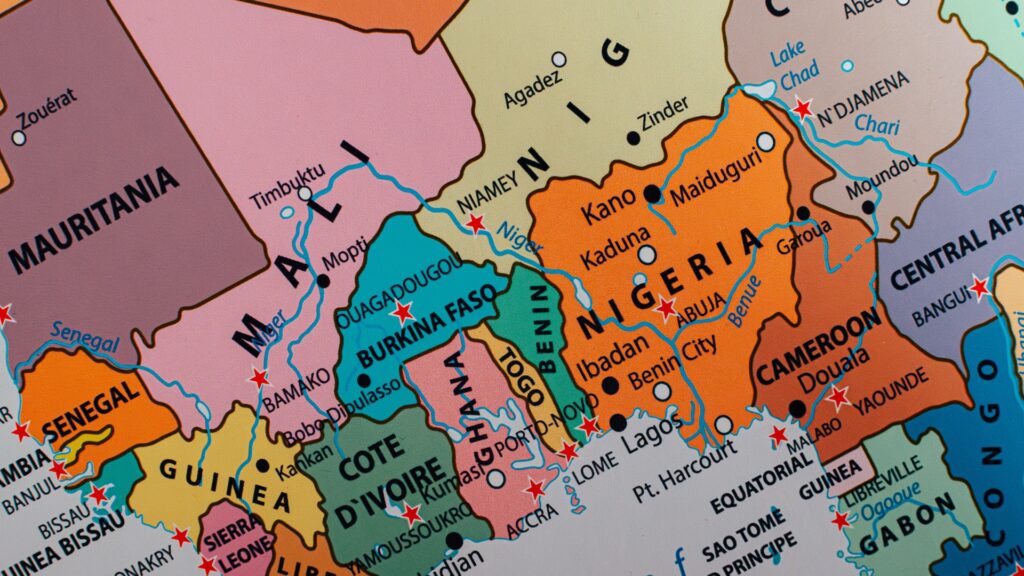
One reason DTT will remain relevant is that Africa’s infrastructure realities are uneven. The Broadband Commission notes both strong ICT growth and continuing challenges involving affordability, quality of service, and geography. The World Bank reports significant growth in internet adoption across Sub-Saharan Africa, but rising connectivity does not mean every household, settlement, or region will immediately shift to broadband-first video consumption in the same way. For many markets, the practical media future is layered: terrestrial broadcasting for mass reach, satellite for wide-area distribution and resilience, and broadband for interactivity, catch-up, personalization, and operational efficiencies. The future of Digital Terrestrial Television therefore sits inside a converged ecosystem rather than outside it.
That convergence is already visible in ITU thinking. A 2023 ITU workshop document on DTT in Africa states that the future of DTT on the continent will be influenced by WRC-23 decisions, notes that UHF is the only harmonized band for terrestrial television in Region 1, and says the 470–694 MHz band can meet most current national spectrum needs for DTT, including complementary technologies such as Integrated Broadcast Broadband and 5G Broadcast. It also states that the same band offers sufficient capacity to improve HDTV quality for most programs and potentially UHDTV for some. This is one of the clearest signals about the future direction of Digital Terrestrial Television in Africa: terrestrial broadcasting is not standing still, but it is likely to evolve alongside complementary technologies rather than disappear because of them.
There is another future-facing point that deserves more attention: public value. ITU material on digital terrestrial broadcasting systems notes that such systems may be efficiently used for public warning, disaster mitigation, and relief. That gives DTT a significance beyond entertainment or channel multiplication. In many African countries, national broadcasting still carries public-interest responsibilities involving information access, education, national events, and emergency communications. The future of Digital Terrestrial Television is therefore tied not only to commercial competition, but also to its continuing value as national information infrastructure.
That said, the future will not reward broadcasters who assume DTT is automatically safe just because it is important. The next phase will favor operators who improve network quality, harden support models, modernize head-ends, and think seriously about user experience. Coverage planning remains central. So does field verification. So does remote monitoring. So does repair and maintenance capacity. AUCOM’s own service structure makes this clear by placing support, maintenance, firmware updates, remote access, and managed services alongside integration and planning. Future-ready DTT is operationally mature DTT.
The future will also be hybrid. ITU’s report framework on integrated broadcast-broadband systems describes IBB as a live, in-force area of study, while its report on digital terrestrial systems notes that IBB systems integrate traditional broadcasting with mobile networks and other communications environments, taking account of the peculiarities of countries and regions. For African broadcasters, that is important because hybrid evolution does not require abandoning terrestrial foundations. It means using terrestrial broadcasting for what it does best, while adding digital layers for interactivity, targeted applications, supplementary services, and new workflows where appropriate.
The table below summarizes the main forces that are likely to shape the future of Digital Terrestrial Television in Africa over the next phase of deployment and optimization. It is based on ITU policy and technical material, DVB’s system definition, AUCOM’s public service profile, and Africa-wide infrastructure realities.
| Future driver | What it means for DTT in Africa | Likely implication |
|---|---|---|
| Spectrum discipline | Continued importance of planned use of UHF broadcasting spectrum | Better-planned networks and stronger protection of broadcast services |
| DVB-T2 and efficient system design | More value from terrestrial capacity through modern standards and network optimization | Improved service quality and more flexible platform development |
| Coverage verification | Greater need to prove real service performance, not just predicted reach | More measurement, refinement, and targeted technical correction |
| Hybrid broadcast-broadband evolution | DTT working alongside broadband, IBB, and possibly 5G Broadcast use cases | More interactive and complementary service models |
| Public-service value | Ongoing role in national information access and warning systems | Continued policy relevance even as media habits diversify |
| Operational maturity | Monitoring, maintenance, training, and managed support as core capabilities | DTT networks that last longer and perform more consistently |
So what is the most realistic answer to the question of where Digital Terrestrial Television is headed in Africa? It is headed toward selective strengthening, not blanket decline. It will remain important where mass reach, cost-effective one-to-many delivery, and public access matter. It will become more valuable where broadcasters improve planning, interoperability, and support. It will become more future-ready where hybrid services are added intelligently. And it will struggle wherever migration is treated as a once-off procurement project rather than an evolving operating system.
The future of Digital Terrestrial Television in Africa will therefore belong to broadcasters and integrators who understand two truths at the same time. First, terrestrial broadcasting still matters. Second, it now has to perform inside a converged media environment. The winners will be the organizations that can modernize DTT without isolating it, protect spectrum without resisting innovation, and build networks that are not only digitally compliant, but operationally dependable.