

A broadcast network operations centre gives technical teams one central environment from which to monitor channels, head-ends, transmission sites, network links and supporting infrastructure. Its purpose is to detect faults, confirm service performance and coordinate technical responses before an isolated problem becomes a wider channel outage. For broadcasters, governments, telecoms providers and media networks, this central visibility is essential when services are distributed across multiple facilities or large geographic areas.
Modern broadcasting depends on a connected chain of production systems, playout, encoding, multiplexing, contribution links, terrestrial transmitters, satellite platforms, IP networks and digital delivery systems. A failure can occur at any point in that chain. A broadcast network operations centre, commonly called a broadcast NOC, brings operational information from these systems together so engineers can identify the location, severity and likely cause of a problem.
What a Broadcast Network Operations Centre Does
A broadcast NOC supervises the technical condition of the systems responsible for media delivery. Monitoring platforms collect status information, alarms, measurements and event logs from connected equipment. Operators use this information to determine whether services are operating normally and to respond when performance moves outside approved limits.
The monitored environment can include incoming programme feeds, playout outputs, encoders, multiplexers, routers, servers, storage, network switches, satellite equipment, terrestrial transmitters, power systems and cooling infrastructure. Off-air receivers may also be used to confirm what viewers are actually receiving rather than relying only on internal system status.
AUCOM’s managed services include 24/7 supervision, monitoring and maintenance of broadcast networks. These services are designed for DTT networks, head-ends, nationwide transmission systems and other mission-critical environments where early fault detection and structured incident response are required.
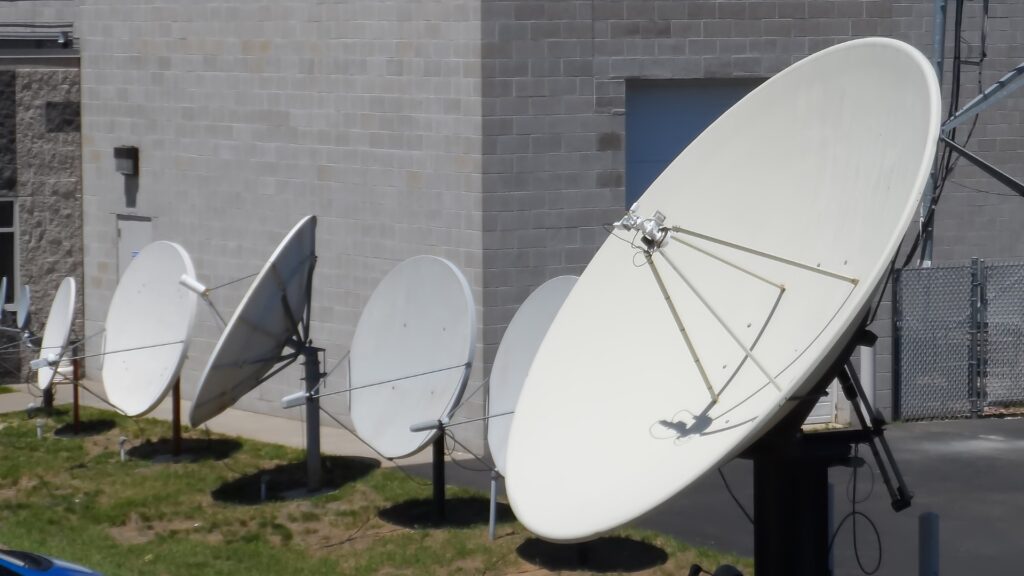
Central Monitoring Improves Fault Visibility
Distributed broadcast networks can contain many sites that are not continuously staffed. A transmitter may experience reduced output power, a contribution link may become unstable, an encoder may stop processing one service or a cooling system may exceed its operating limit. Without central monitoring, the first indication of a failure may come from viewers, regional teams or downstream platform partners.
A network operations centre reduces this dependence on manual reporting. Equipment alarms and performance measurements are sent to a central platform where they can be displayed, recorded and prioritised. Engineers can then compare information from different parts of the service chain and establish whether the fault is local, regional or platform-wide.
This is particularly important for national and regional networks. A single head-end or distribution fault may affect several transmitter sites, while a fault at one remote site may affect only a defined coverage area. Centralised information helps the technical team make that distinction quickly.
Monitoring Must Cover More Than Equipment Status
Basic equipment monitoring shows whether a device is powered, connected or reporting an internal alarm. Professional broadcast monitoring must go further. Engineers also need to know whether the media signal is present, technically valid and suitable for delivery to the audience.
The International Telecommunication Union distinguishes between status monitoring and perceptual quality monitoring in digital broadcasting chains. Status monitoring checks whether signals, equipment and networks conform to an expected operational condition. Quality monitoring assesses whether the video, audio or data service meets the required quality level. Both are relevant to a broadcast network operations centre because equipment may appear online while the content being delivered is damaged, frozen, silent or incorrectly configured.
Monitoring points should therefore be placed at important stages of the broadcast chain. These may include the source feed, playout output, encoded service, multiplex, distribution link, transmitter input, RF output and off-air reception point. Multi-point monitoring helps engineers identify where a fault first appeared.
Alarm Management Prevents Information Overload
A large broadcast network can generate thousands of status messages and alarms. Not every event has the same operational importance. A complete channel loss requires a different response from a non-critical warning about storage capacity or a scheduled backup process.
Alarm management should classify events by severity, service impact and required response. Critical alarms may include loss of channel output, transmitter failure, satellite carrier loss, power failure or the loss of both primary and backup network paths. Lower-priority alarms may indicate conditions that need investigation but do not yet affect the live service.
Related alarms should also be correlated where possible. A site power failure may trigger separate alarms from the transmitter, network switch, cooling equipment and monitoring system. Presenting these as unrelated events can delay diagnosis. A well-configured NOC helps operators see the common cause and direct the correct technical response.
DTT Networks Need Remote Site Monitoring
Digital terrestrial television networks often include a central head-end and multiple transmitter sites. These sites may contain transmitters, exciters, antenna systems, distribution receivers, power equipment, cooling systems and network connections. Many are located far from the broadcaster’s main technical facility.
A broadcast NOC allows operators to monitor transmitter output, equipment alarms, transport streams, input feeds, temperature, electrical conditions and site connectivity remotely. Where permitted, engineers may also use secure remote-control functions to restart equipment, switch to a backup path or change an approved operating configuration.
AUCOM’s Digital Terrestrial Television solutions include head-end design, system integration and nationwide transmitter deployment. Monitoring should be included in the original DTT architecture because it becomes more difficult and costly to add consistent remote visibility after sites have entered live operation.

The NOC Supports DTH, Playout and IP Delivery
A broadcast network operations centre is not limited to terrestrial transmission. It can monitor DTH satellite platforms, contribution links, playout systems, OTT services and IPTV infrastructure. The monitoring method changes according to the platform, but the operational objective remains the same: confirm that the correct service is available and identify failures quickly.
For DTH, the NOC may monitor encoders, multiplexers, conditional access, modulators, amplifiers, uplink carriers and off-air satellite reception. For playout, monitoring may cover playlist execution, server status, input availability, graphics, audio levels and channel outputs. IP-based systems can add network utilisation, packet loss, timing, latency and device health to the monitoring scope.
SMPTE’s technical work on IP monitoring and measurement reflects the growing need to supervise media flows as broadcast facilities move from traditional baseband infrastructure to managed IP networks. A modern NOC may therefore need both broadcast engineering and ICT network expertise.
Incident Response Turns Alarms Into Action
Monitoring alone does not restore a failed service. A broadcast NOC needs documented incident processes that define what operators must do after an alarm is received. The process should cover validation, prioritisation, escalation, communication, technical recovery and final reporting.
The first step is to confirm whether the alarm represents a genuine service problem. Operators then assess the affected channels, sites, platforms and audience areas. Known recovery procedures may be applied immediately, such as switching to a redundant encoder, backup link, standby transmitter or alternative input.
More complex faults may need escalation to senior engineers, field teams, equipment manufacturers, satellite operators or connectivity providers. AUCOM’s 24/7 technical support includes round-the-clock support, remote diagnostics, severity-based response, escalation and root-cause analysis for mission-critical broadcast and communication systems.
Broadcast NOC Planning Checklist
The main operational requirements should be defined before a broadcast network operations centre is commissioned.
| Planning Area | What Must Be Defined | Risk if Overlooked |
|---|---|---|
| Monitoring scope | Channels, head-ends, transmitters, links, power, cooling and digital platforms. | Important failures may occur outside the monitored environment. |
| Alarm priorities | Critical, major, minor and informational events based on service impact. | Operators may miss urgent incidents among low-priority warnings. |
| Escalation process | Responsible teams, contact routes, response targets and vendor support. | Delays occur because ownership of the fault is unclear. |
| Redundancy control | Backup systems, failover rules, remote switching and recovery testing. | Standby systems may not restore the service when required. |
| Reporting | Incident logs, service availability, recurring faults and performance trends. | Problems repeat because technical causes are not reviewed. |
| Security | User access, remote connections, change control and activity logging. | Unauthorised access or uncontrolled configuration changes. |
Redundancy Must Be Visible and Tested
Broadcast systems commonly include redundant devices and signal paths, but a backup component only protects the service when it is available and correctly configured. The NOC should monitor primary and standby systems instead of assuming that the backup remains ready.
For example, a channel may continue operating through its primary encoder while the backup encoder has already failed. Without monitoring, the loss of redundancy may remain hidden until the primary device develops a fault. The same risk applies to network links, power supplies, transmitter exciters, amplifiers, playout servers and satellite equipment.
Scheduled failover tests should confirm that backup systems can take control without creating unacceptable service disruption. Results should be recorded, and faults found during testing should be resolved before the redundancy is relied upon in a live incident.
Reporting Supports Long-Term Reliability
A network operations centre creates operational data that can be used for more than immediate fault response. Incident records, alarm frequency, equipment performance and recovery times help technical managers identify recurring weaknesses. This information can guide maintenance, spares planning, system upgrades and staff training.
Reports should identify what failed, which services were affected, how the fault was detected, what action restored the service and what should prevent recurrence. Root-cause analysis is especially important where the same site or component creates repeated interruptions.
AUCOM’s maintenance and support services include baseline assessment, proactive monitoring, issue resolution, reporting, critical spares planning and scheduled maintenance. Connecting NOC data to the maintenance programme allows technical work to be prioritised using actual system conditions.
Security and Change Control Protect the Network
A broadcast NOC may provide access to systems across several facilities and countries. Remote control functions can be valuable during a fault, but they must be secured. User accounts should be assigned according to job responsibilities, and sensitive actions should require appropriate authorisation.
Configuration changes should be documented so operators know what was altered, when it changed and who approved it. Uncontrolled changes can create faults that are difficult to diagnose because the current system no longer matches the approved design or documentation.
Network segmentation, secure remote access, audit logs, password management, software updates and backup configurations should form part of the operational plan. The NOC must protect access without preventing authorised engineers from responding quickly to a service incident.
African Broadcast Networks Need Practical NOC Design
Broadcast networks across Africa may cover wide areas with varying levels of connectivity, grid stability and site access. A central monitoring design must account for these operating conditions. Remote sites may need resilient communications, local data buffering or alternative alarm paths when the primary network connection is unavailable.
The NOC should also reflect the skills and staffing available to the operator. Displays, dashboards and procedures must help engineers make decisions rather than produce unnecessary technical noise. Local teams need training on alarm handling, escalation, remote access and recovery procedures based on the actual installed infrastructure.
For national broadcasters and public communication networks, the operational plan should include high-impact events such as power loss, head-end failure, distribution-link failure and the loss of multiple transmitter sites. These scenarios can be tested through controlled exercises before they occur during live service.

Central Oversight Protects Service Continuity
A broadcast network operations centre protects service continuity by turning technical data into coordinated action. It gives engineers visibility across channels, head-ends, links, transmitter sites, satellite systems and digital platforms. It also creates a structured environment for alarm management, escalation, redundancy control, reporting and long-term performance review.
For broadcasters, governments, telecoms providers and media networks, the value of a NOC lies in earlier detection, clearer diagnosis and more controlled recovery. The strongest results come from designing monitoring as part of the full broadcast infrastructure rather than adding it after operational problems have already appeared.
For further technical guidance, see the ITU-R recommendation on monitoring broadcasting chains during operation and the SMPTE resource on IP monitoring and measurement.